

Havuts Tar Monastery Complex and the Symphony of Stones
On December 15, 2024, on a cold morning, we set off for the Kotayk region. The weather forecast suggested we wouldn’t be deprived of a sunny, blue sky, since the air temperature was going to drop quite a bit.
In the clear air, Mount Ararat was so close it felt like you could reach out and touch it, while Aragats seemed to hang in the air. But this clear weather was also very cold, which pushed us to walk without stopping.
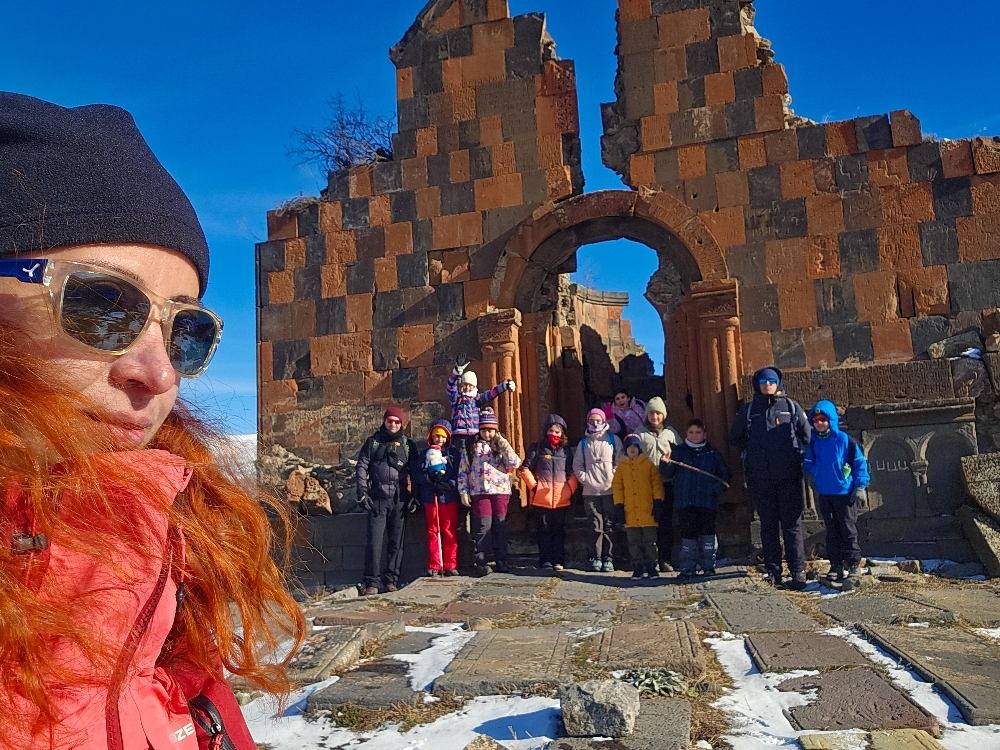
During the hike, we were to walk to the Havuts Tar monastery complex and, at the end, also visit the Symphony of Stones. The starting point of the hike was the Garni visitor center. The road leading to Havuts Tar was completely covered with snow, and because of the cold it was quite firm, so we didn’t sink in as we walked, which made walking comparatively easy. Despite the cold and the risk of slipping it caused, the children kept finding time for snowball fights. The entire hiking trail was in the shade, but we were encouraged by seeing that Havuts Tar was in the sun.
During this hike we were in the Khosrov Forest State Reserve, discovered Havuts Tar, and also visited the Symphony of Stones.
The Khosrov Forest State Reserve is a territory protected by the state. The protected area was created in 330–338 on part of a forest planted by King Khosrov III Kotak. It has a history of about 1,700 years. Historically, the reserve’s present territory was located in the Ayrarat province of Greater Armenia. The “Khosrov Forest” State Reserve was established in 1958 in the central part of Soviet Armenia to protect semi-desert, phrygana and semi-savanna landscapes and unique plant and animal communities.
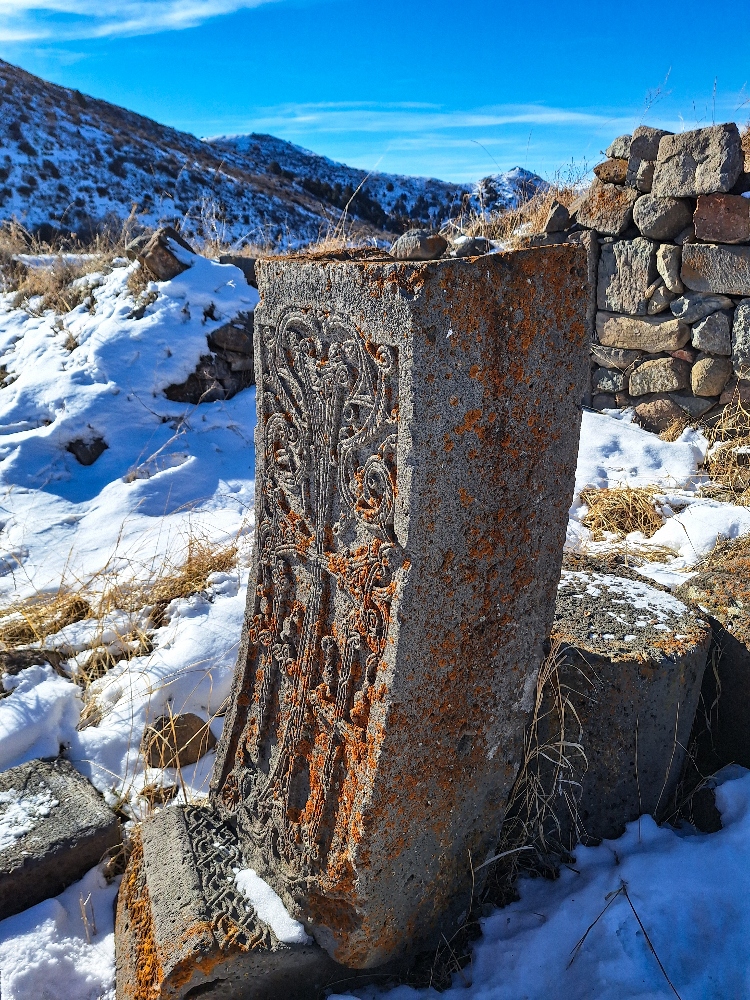
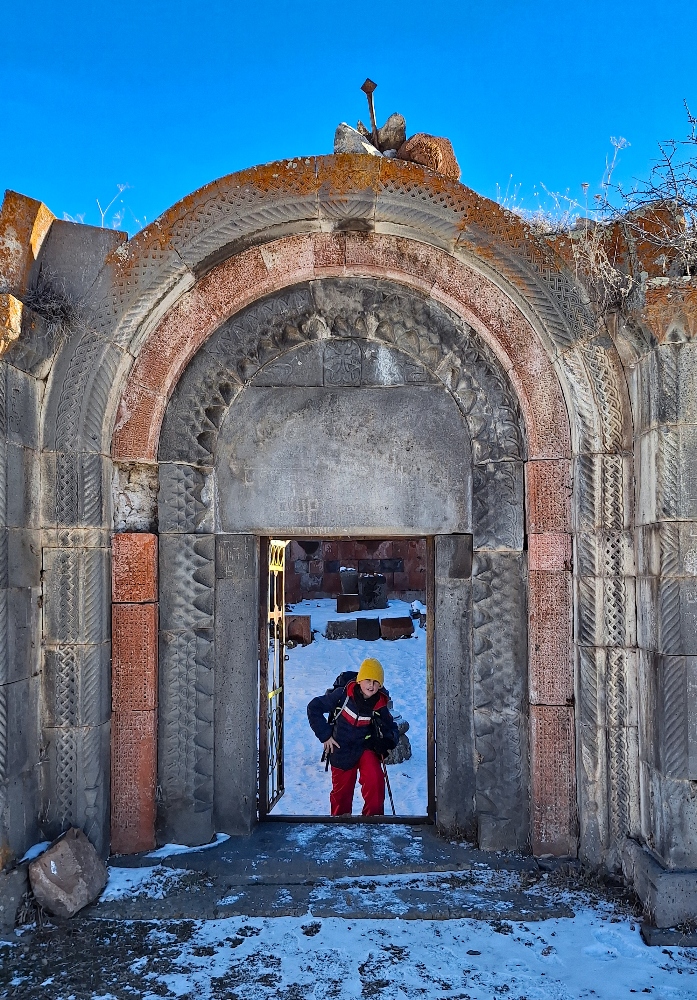
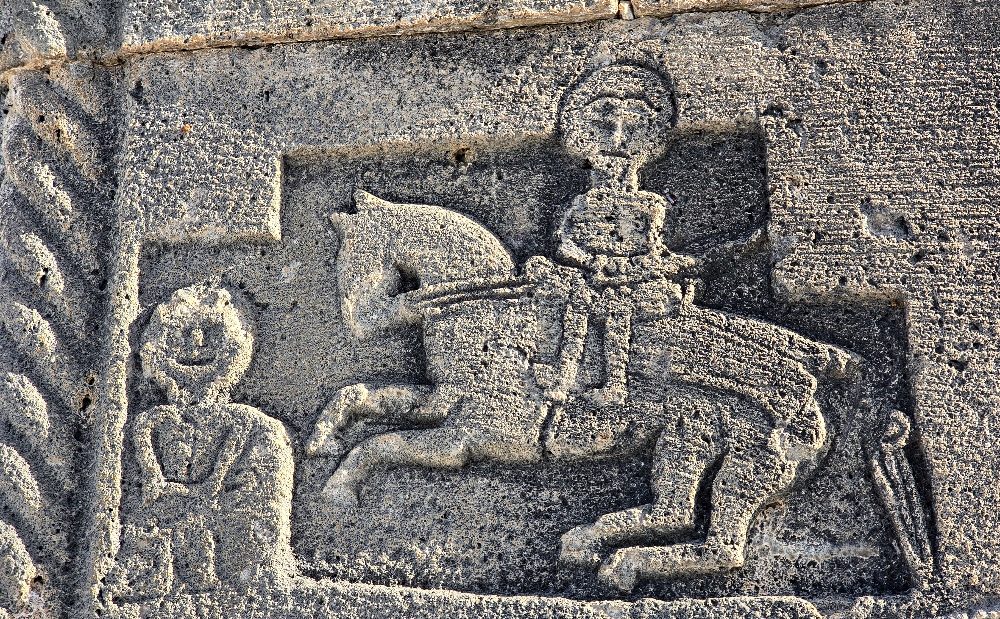
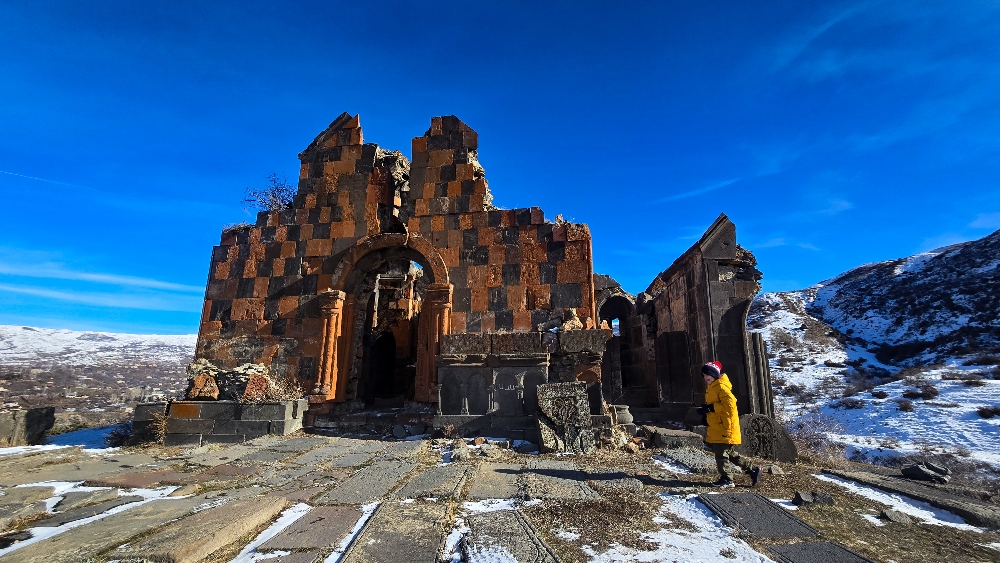
Havuts Tar was one of the religious and cultural centers of medieval Armenia. In this monastery, known since the early Middle Ages, Grigor Magistros Pahlavuni built the Surb Amenaprkich (Holy All-Savior) church in 1013. Havuts Tar flourished in the 12th–14th centuries. It suffered from the earthquake of 1679 and was finally destroyed during the Akori earthquake of 1840.
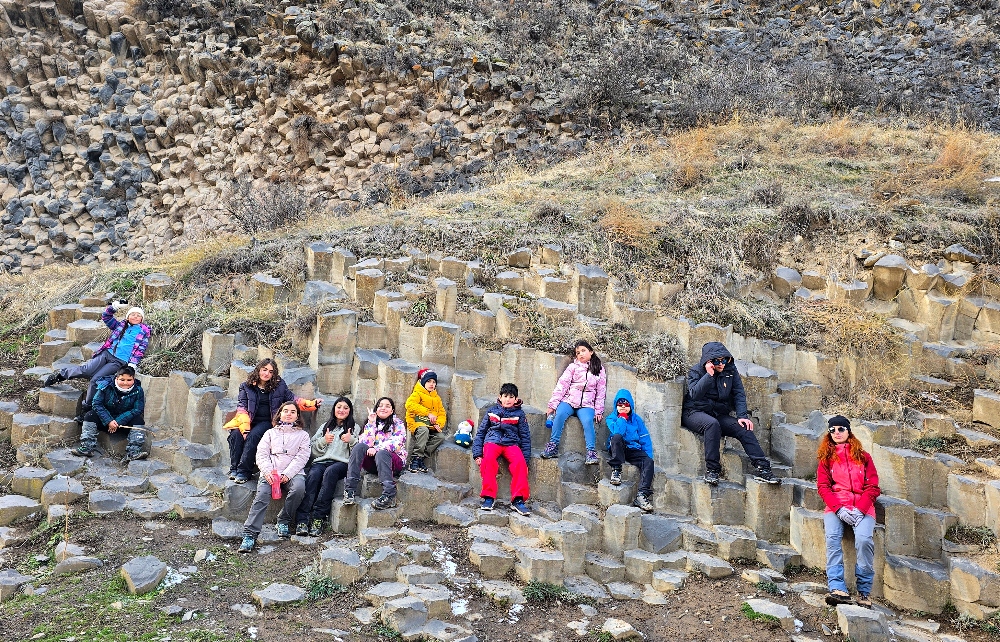
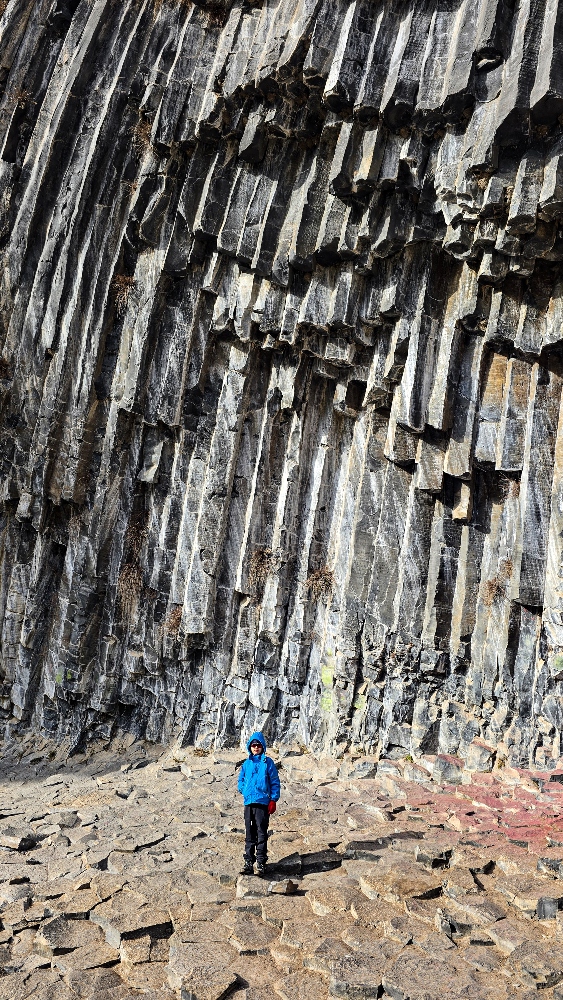
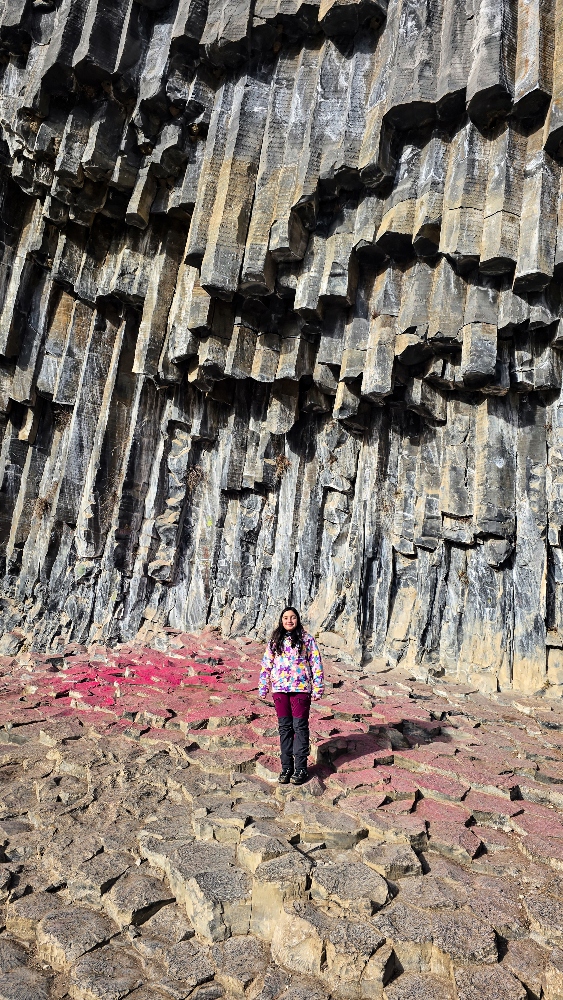
The Symphony of Stones, also known as the “Basalt Organ”, is a natural monument. It is included in the list of natural monuments of Armenia. The Symphony is made up of huge pentagonal and hexagonal basalt columns (about 50 m high), which, because of their amazing symmetry, look man-made. Carved by nature, the row of these columns hanging above the river resembles a musical composition: the “Basalt Organ”.
These are the wonders we got to know during one hike, in addition to walking 7.5 km and covering 250 m of elevation gain.
Would you like to join us?
We regularly organize hikes and camps for children. See what is coming up and join us.
Upcoming hikes and camps →