Yeghuniki Er and Slulik Er Caves
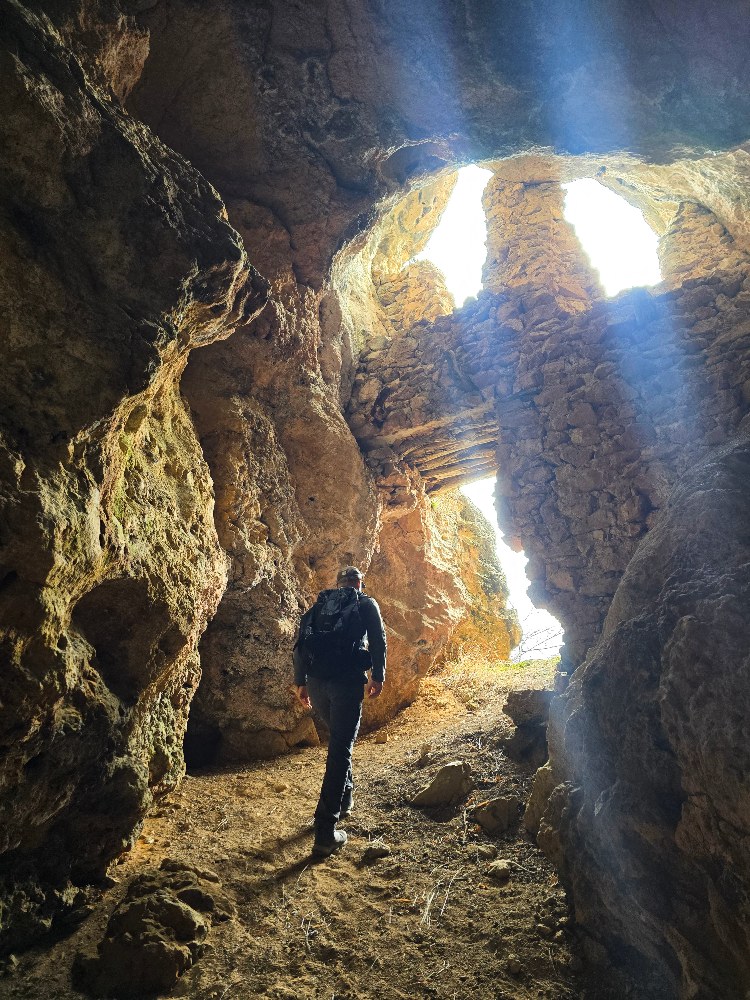
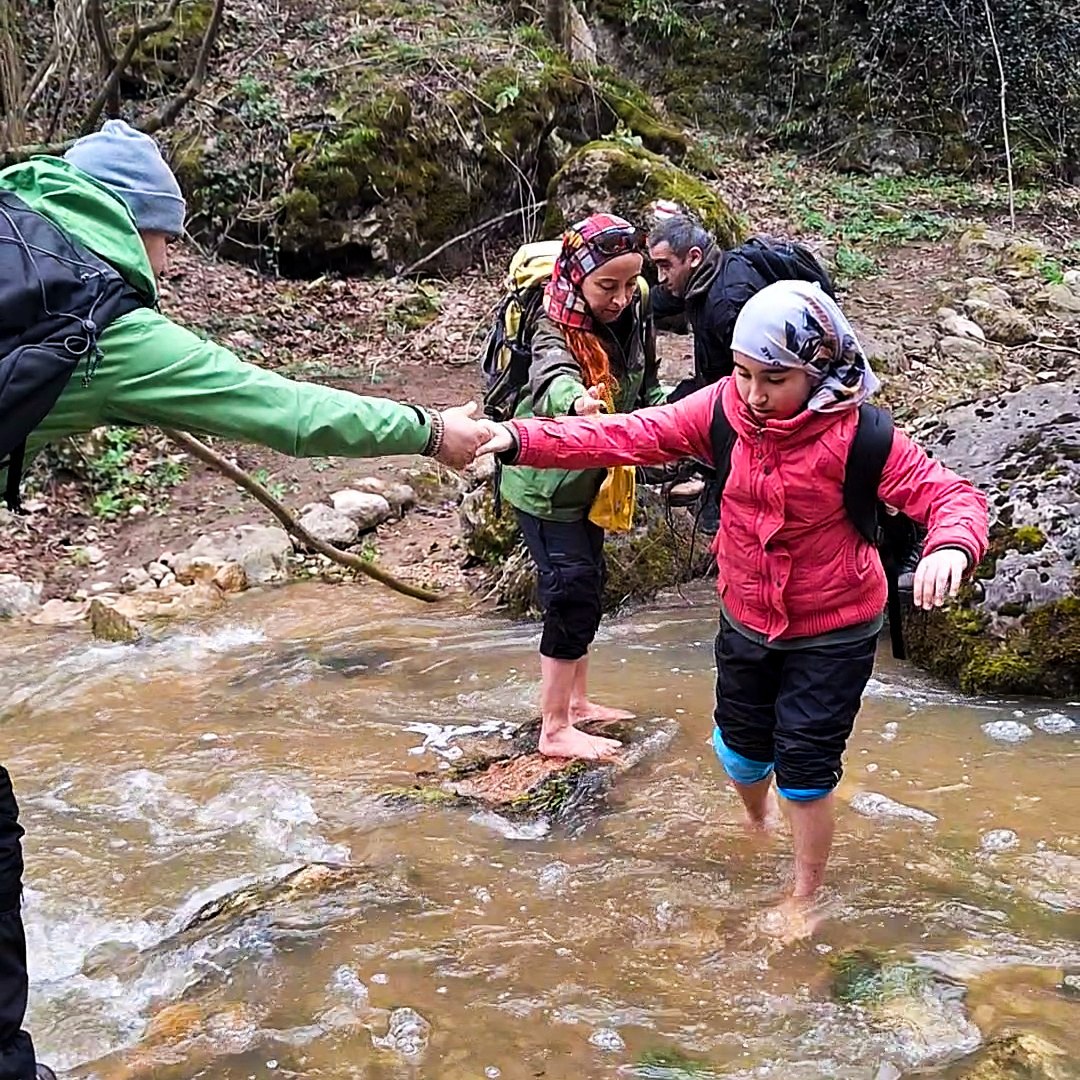
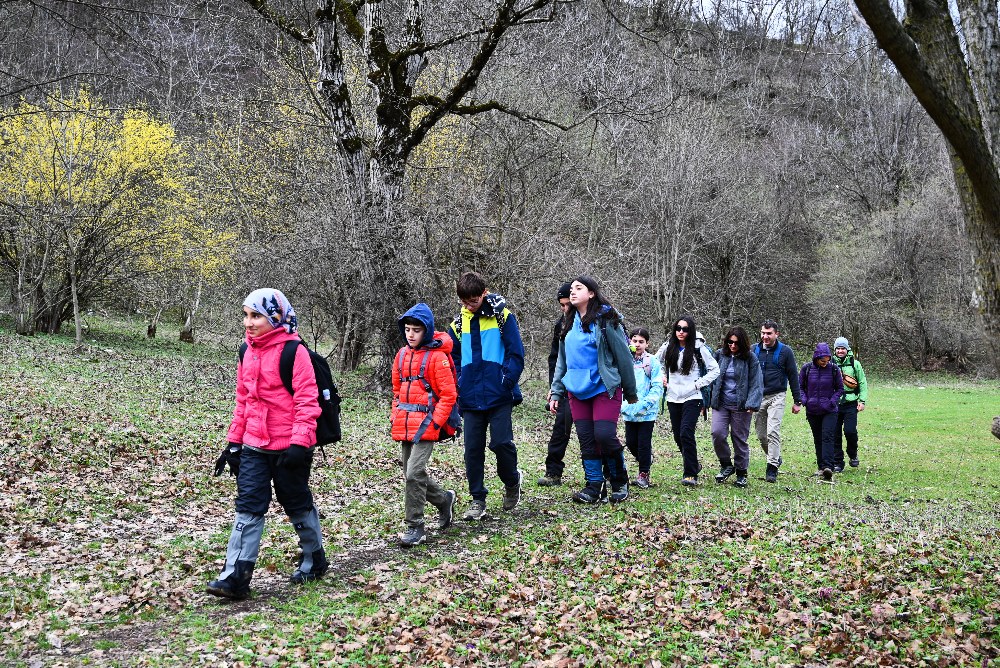
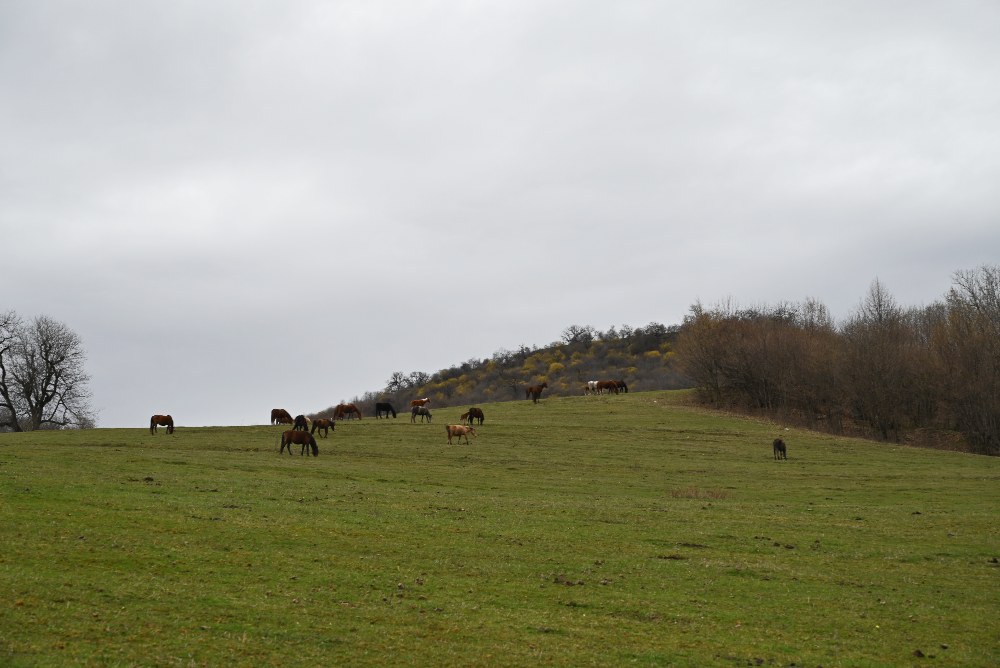
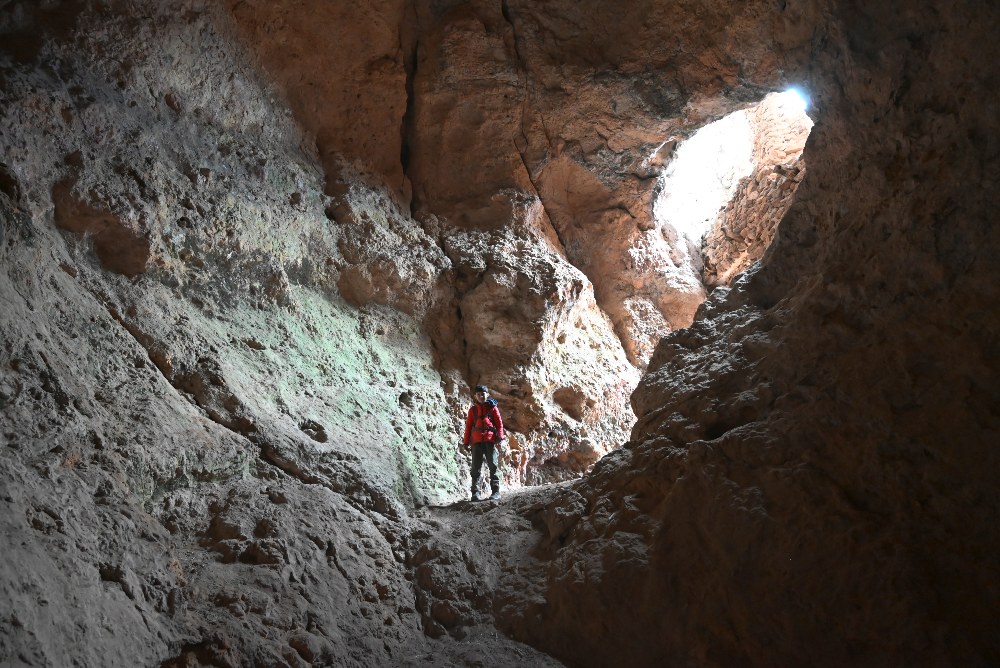
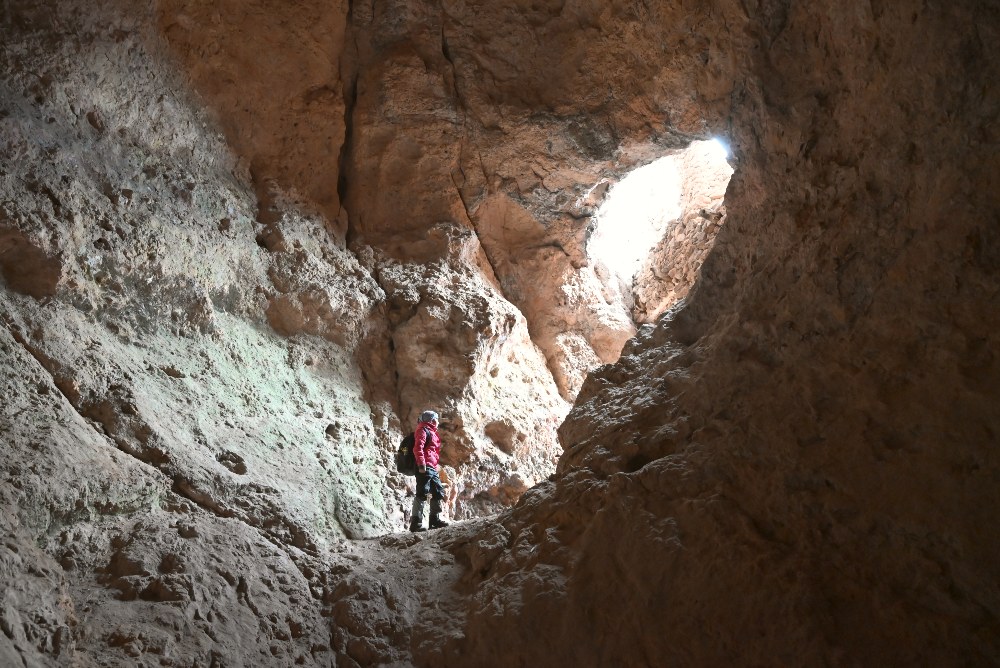
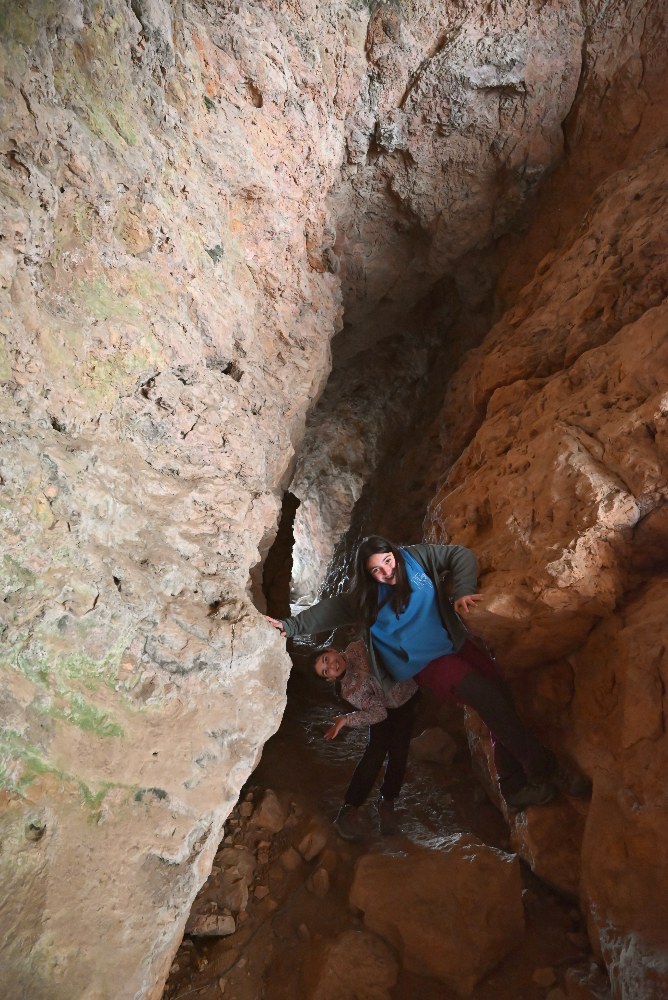
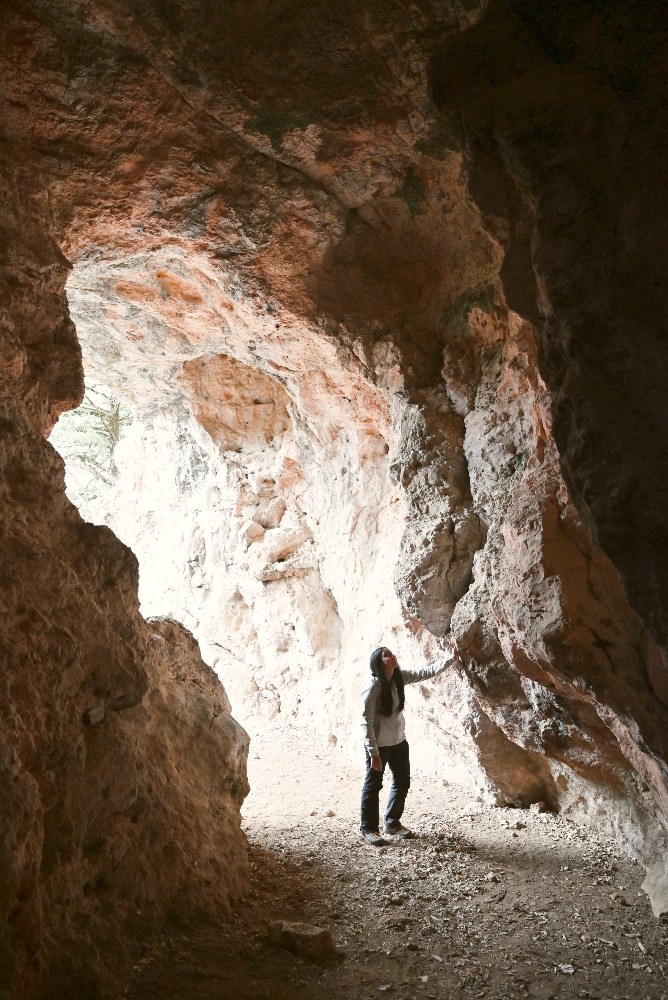
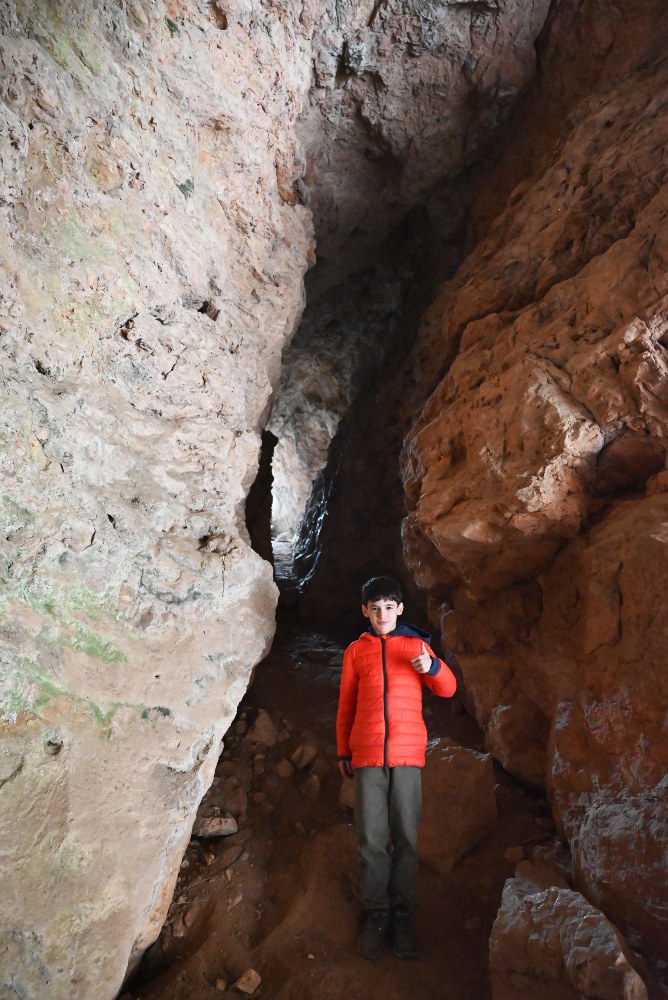
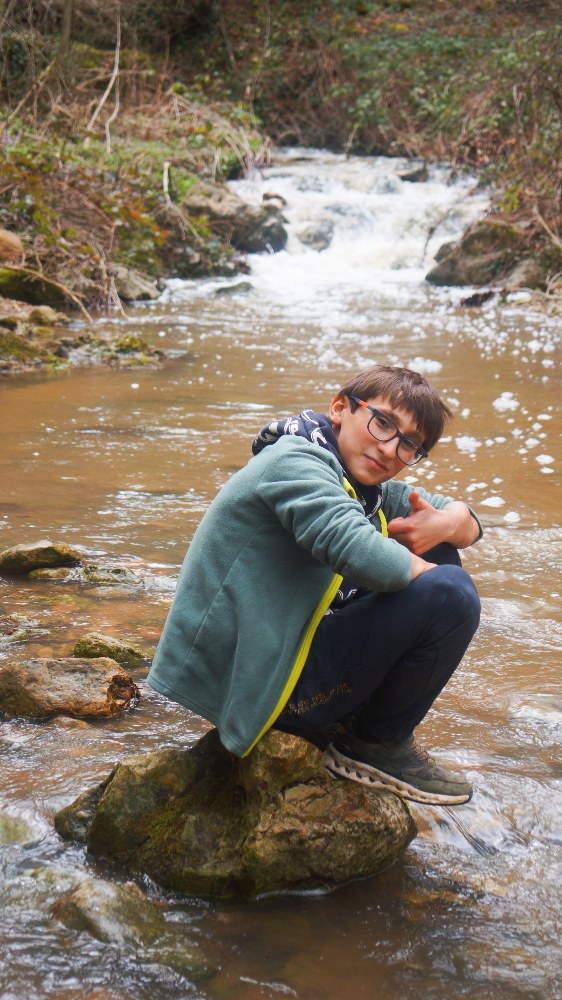
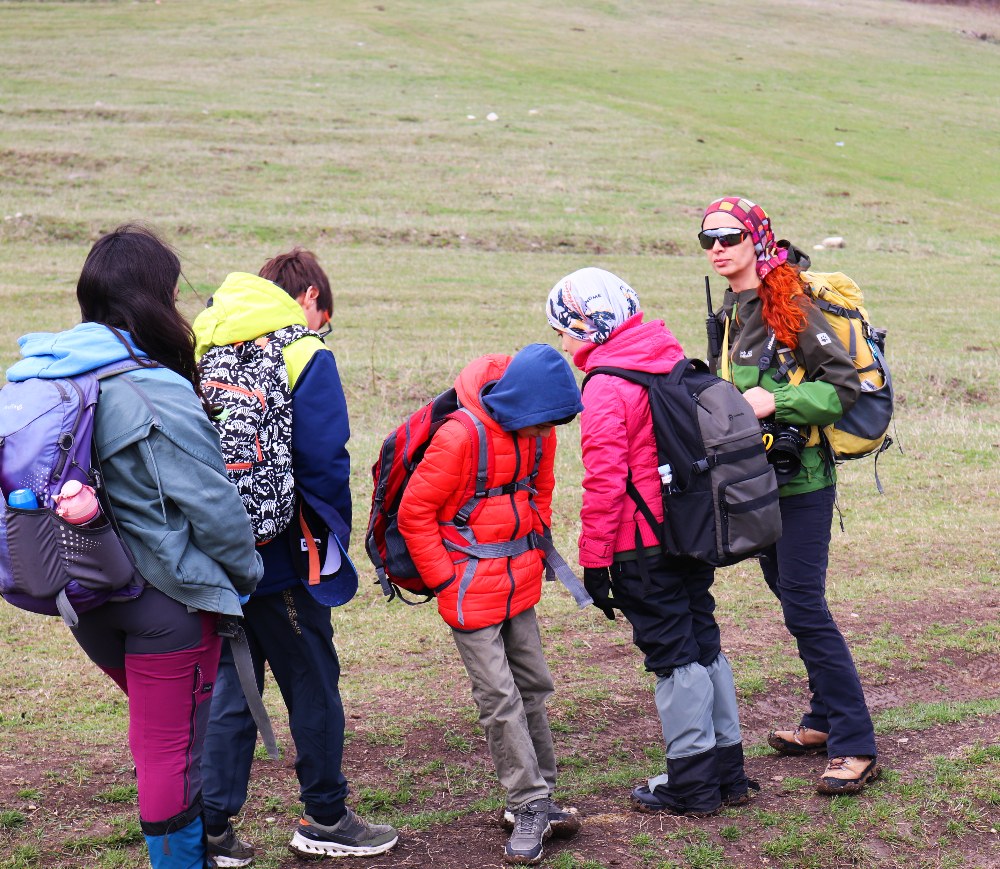
On March 29, 2026, we went to the Tavush region. This time, exciting challenges awaited us. We started the hike near Yenokavan village, then headed to the Yeghuniki Er and Slulik Er caves. The previous week, our club guides had scouted the area to see if the trail was suitable for children. That day, the river was unusually high. Usually, the Mtnadzor River has little water, but that day we had to think a bit longer about where to cross. Anyway, we realized that crossing the river on the day of the hike with the kids would be a fun challenge. And we weren’t wrong. Although it was raining in Yerevan and even lightly snowing near Tsovagyugh, Tavush welcomed us with dry, warm weather, and near Ijevan, even the blue sky was smiling. The fresh green nature, horses and foals grazing peacefully, and cows and calves watched us with surprise. The small canyon descending toward Mtnadzor is very impressive with its terraced paths. The sound of the river could be heard from afar. Although the river had risen compared to a week ago, it wasn’t so high that it was impossible to cross. So, without overthinking it, we took off our shoes and socks and started crossing. To reach the caves, we had to cross the river three times. After crossing twice, we decided not to put our shoes back on until the third crossing, so we walked barefoot. We successfully crossed the third time and began climbing toward the high cliffs. Yeghuniki Er is located within one of these cliffs. The eastern entrance has an opening of 230×600 cm, which was closed off by a 2-meter-thick wall with a door opening in the lower right corner. The cave leaves a great impression with its high ceiling and space. After resting here for a bit, we continued our hike toward Slulik Er. “Slulik Er” (Pointed Cave) is another cave in the crevices of Mtnadzor used as a shelter from enemies; one of its entrances is so small you might not even notice it. To reach this cave, you need to pass through an arched path between layered rocks. As mentioned, the entrance to Slulik cave is very small. But when you enter through that triangular opening, you pass through a narrow corridor of rocks and find yourself in a large hall, and outside the hall, a beautiful balcony opens up to the Aghstev valley. After resting here as well, we continued the hike toward Lusadzor village. To reach Lusadzor, we had to cross the river five more times. We were already crossing the river skillfully; even the coldness of the water didn’t hold us back. We had a memorable hiking day.
We walked 7 km and climbed 150 m in elevation.
Near Lusadzor, there are caves where residents of surrounding villages took shelter during Lezgin raids (18th century). There used to be several villages in the vicinity, traces of which can be found in the fields of Lusadzor.
The natural caves opened in the face of the high cliff of the Mtnadzor canyon and within the powerful crags along the riverbanks were adapted as shelters centuries ago. Some were intended for a single family, others for several dozen, and the largest for several hundred people.
After retreating to the forest, if the village militias were able to withstand the raid or if the raiders did not pursue the peaceful population and were satisfied with looting the villages and leaving, those sheltered in the caves at the foot of the cliffs soon returned home. When the pursuit of the peaceful population began for the purpose of taking captives, the refugees turned to the second and almost impregnable line of the defense system: the Aghavnu (Pigeon) Cave, which in the local dialect is called “Yeghuniki Er,” meaning “Pigeon’s Cave,” because countless wild pigeons—yeghuniks—used to perch here.
The sloping, often almost vertical wall of the cliff, covered with trees and bushes rising from the bottom of the gorge, ends at a height of 250 m. Right in the middle of that vertical wall is the Aghavnu Cave, which is invisible from the outside because its noticeable part—the entrance wall placed in one of the eastern crevices—is built from the same reddish stones taken from the cliff and blends perfectly with it. From its threshold, a panorama of the Aghstev gorge opens up, thanks to which those who resorted to self-defense had a good opportunity to monitor the movements of the approaching enemy. The cave itself is a natural niche with a gently sloping floor opened in the tufa rock, which arcs 35 meters in an east-south direction. The height is 4–6 meters, and the width is 6–8 meters.
The cave had two natural entrances. The southern one, being over the abyss of the gorge, served as a window and a lookout point for the southwestern slopes of the valley; it has remained in its original state, with a platform in front where 15–20 people can sit under the open sky. The eastern entrance, which has an opening of 230–600 cm, was closed with a 2-meter-thick wall. According to legend, the mortar was made with the milk of the sheep herds driven here; therefore, it is impossible to break even a single chip from the lime-mortar wall. In the lower right corner of the structure, the master builder left a door opening, the lintel of which was supported by 8 round juniper beams that became as hard as steel in the dry environment; on the third one, a round hole for a wooden door hinge can be seen. The latter was closed from the inside when necessary with wooden bolts, the ends of which went into the wall.
After closing the door, the besieged continued to monitor the movements in the Aghstev valley and the approaches to the nearby gorge through holes left at the top of the cliff entrance, through which daylight penetrated inside and removed the smoke from the fires burning within, the soot of which remains abundantly on the walls. Legend also states that in the 19th century, skilled shepherds would bring their flocks to the cave during bad weather, where up to 400 sheep would huddle. In that case, up to 250 people could take shelter here. In the early 20th century, this also served as a hiding place for outlaws (ghachaghs).
This cave practically served as an impregnable fortress. If the enemy eventually found its location, their soldiers would have approached the entrance with extreme difficulty because they could only climb one after another in a single file; in that case, a few Armenian men hidden in favorable positions on the rock could easily hurl them into the abyss with stones thrown from above. Even if the attackers reached the entrance, they would find a firmly closed, solid door, behind which people who had accumulated supplies of food and water could calmly wait for days for the desired resolution of events, since the bandits out for plunder could neither use siege engines on the mountain heights, nor could rocks be blasted in those centuries. A prolonged siege would add nothing to the spoils of war; therefore, as folk memory suggests, the raiders achieved success through sudden attacks, depriving the peaceful population of the opportunity to retreat to their hiding places.