

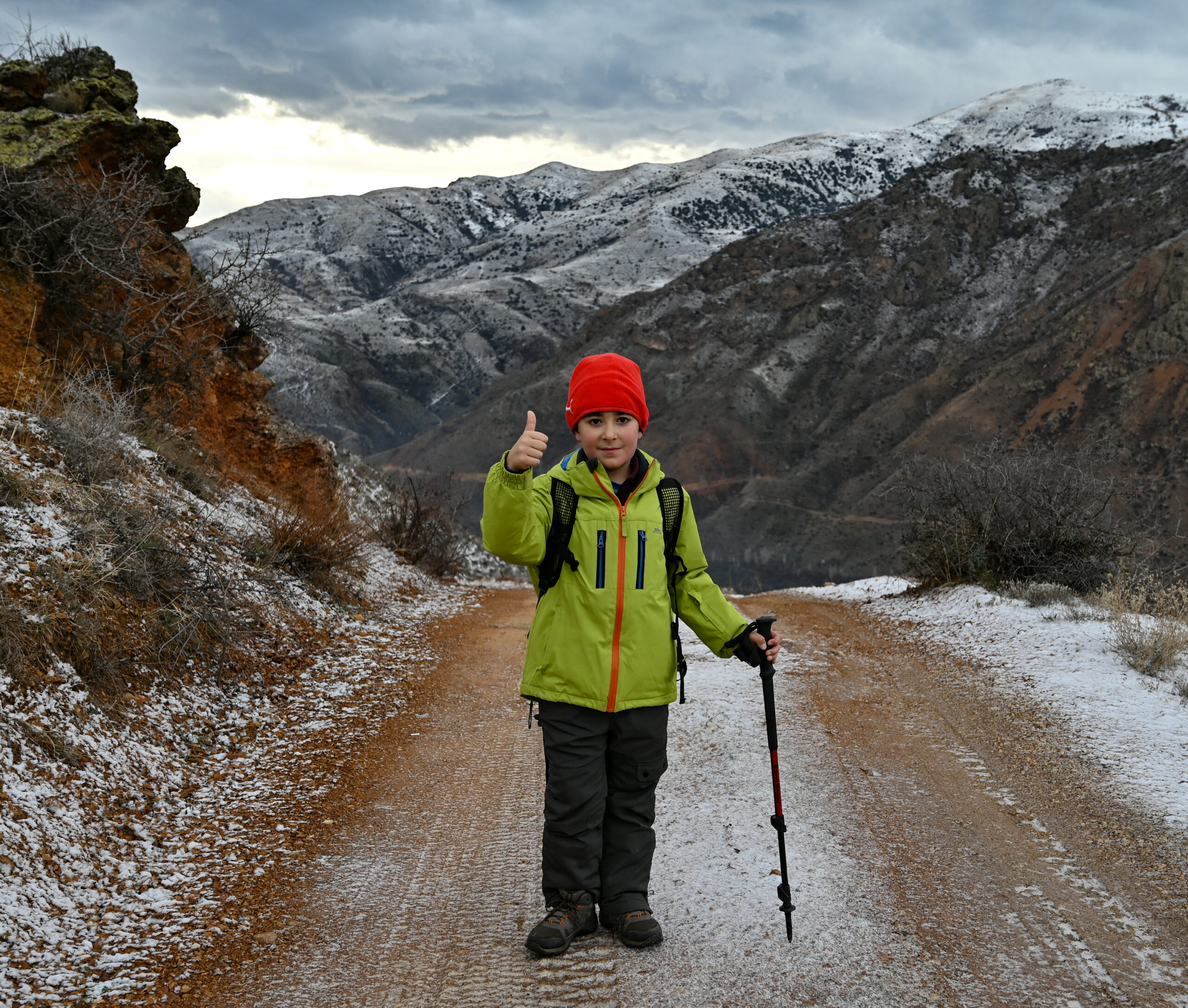
“4 PEAKS Mountain Club” Mountaineering Development NGO as non-formal education
The organization’s activities constitute systematic and organized non-formal education aimed at developing children’s knowledge, skills, and value systems through nature and the mountain environment.
The club’s educational model is not part of the state curriculum, but it has a clear structure, content, and continuity of learning. It is implemented in the following formats:
1. Five-month educational program
Children receive systematic knowledge about:
- mountain hazards and risk management,
- skills for overcoming natural obstacles,
- recognizing altitude sickness,
- theoretical and then practical skills regarding tents,
- use of map and compass,
- conventional signs,
- first aid,
- geography,
- knowledge about wildlife, reptiles, and weather hazards;
- hike planning, preparation, behavior, and breaks during the hike,
- climbing,
- and other important knowledge and skills.
This program complies with the basic principles of non-formal education:
✔ voluntary participation
✔ experiential learning
✔ practical application
✔ development of essential life skills
2. Experiential learning in nature
Camps, hikes, and ascents are not just leisure activities. They are real field training where children:
- develop teamwork,
- learn responsibility,
- make decisions in real-world conditions,
- overcome difficulties,
- build resilience and self-confidence.
This format is one of the most important components of non-formal education: learning through experience.
3. Continuous education and holistic child development
The organization’s activities are in harmony with the concepts of “continuous education” and “lifelong learning,” because:
- education is not limited to the classroom,
- physical, mental, and value-based skills are developed,
- environmental responsibility is formed,
- self-education and self-development are encouraged,
- they are educated to know, love, and be responsible for their homeland,
- they gain independence.
4. Social inclusion
The organization’s activities provide an opportunity for children who do not have developmental platforms outside the formal educational system to get involved.